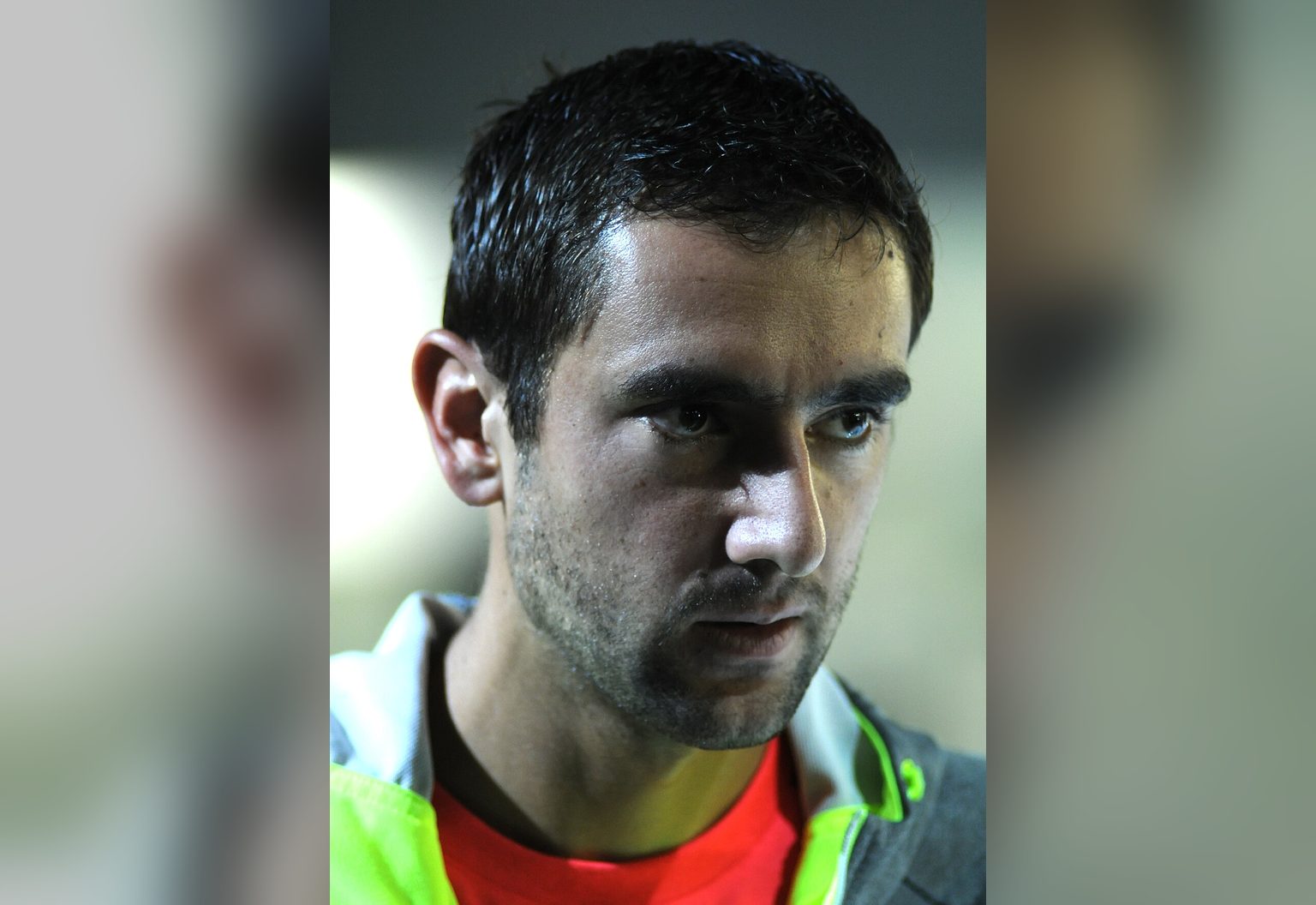
Nine sets, none lost. That was how Marin Cilic finished the 2014 US Open, beating Tomas Berdych, Roger Federer and Kei Nishikori in succession to claim his first Grand Slam title. In a period dominated by a small group of champions, the Croatian broke through by taking the ball early and giving some of the sport’s best defenders little time to respond.
New York remains the centrepiece of his career, but it is not the whole story. There were two more major finals, a climb to world No. 3, a Davis Cup triumph and, after knee problems sent his ranking tumbling, an unlikely return to the winner’s circle.
From Medjugorje to the junior title in Paris
Born on September 28, 1988, in Medjugorje, in what is now Bosnia and Herzegovina, Cilic grew up in a Croatian family with three brothers. Tennis took hold during childhood, with his father encouraging his development.
At 15, he moved to Sanremo, Italy, to train with Australian coach Bob Brett. It was a substantial change for a teenager: a different country, a demanding training environment and the prospect of turning promise into a profession. Brett, who had worked with Boris Becker and Goran Ivanisevic, remained his coach until 2013.
The first international breakthrough came on clay. In 2005, Cilic won the French Open boys’ singles title, beating Antal van der Duim in the final, and reached No. 2 in the junior rankings. He also turned professional that year.
His height would eventually become one of his clearest advantages. At 1.98 metres, he could generate steep angles on serve, but building a reliable tour-level game took longer than winning a junior major.
A first title, then a place among the contenders
In 2008, Cilic collected his first ATP singles title in New Haven, defeating Mardy Fish in the final. The following season brought titles in Chennai and Zagreb, along with a straight-sets victory over Andy Murray at the US Open.
That result offered an early glimpse of the damage he could do when his attacking game held together over a long match.
At the 2010 Australian Open, he went further. Victories over Juan Martin del Potro and Andy Roddick carried him into his first Grand Slam semifinal, where Murray stopped him in four sets. Soon afterwards, he entered the top 10 for the first time.
He was becoming an established contender, though not yet a consistent threat at the very biggest tournaments. His serve and groundstrokes could overwhelm opponents; maintaining that level through an entire fortnight remained the challenge.
The suspension and the change of coach
His progress was interrupted in 2013 by an anti-doping case. Cilic tested positive for nikethamide, a banned stimulant, after taking glucose tablets purchased at a pharmacy.
An initial nine-month suspension was reduced to four months by the Court of Arbitration for Sport in October 2013. The tribunal accepted that his ingestion had been inadvertent and assessed his degree of fault as lower than the original ruling had. The reduced sanction did not erase the violation.
That season also ended his long coaching partnership with Brett. Later in the year, he began working with Ivanisevic, whose Wimbledon victory in 2001 had made him Croatia’s first men’s Grand Slam singles champion.
Together, they worked towards a more assertive game: a stronger serve, cleaner attacking patterns and greater willingness to dictate points.
The fortnight that changed his career
Cilic arrived at the 2014 US Open with titles from Zagreb and Delray Beach already secured that season. Even so, he was seeded 14th, outside the most obvious championship contenders.
His route was not entirely smooth. Gilles Simon pushed him to five sets in the fourth round. Once through that test, however, his tennis became remarkably economical.
He beat Berdych in straight sets in the quarterfinals, then did the same to Federer in the semifinals. Against the five-time champion, his serve and flat groundstrokes repeatedly took control before Federer could establish a rhythm.
Nishikori, who had beaten Novak Djokovic in the other semifinal, faced the same problem in the final. Cilic won 6-3, 6-3, 6-3.
Thirteen years after Ivanisevic’s Wimbledon triumph, Croatia had another men’s major singles champion. His coach watched from the stands as the player he had helped reshape delivered the biggest performance of his career.
Cincinnati, Federer and the climb to No. 3
Backing up a Grand Slam title brought a different kind of pressure. Cilic qualified for the ATP Finals in 2014, and returned in 2016, 2017 and 2018, although he never progressed beyond the round-robin stage.
His next major tournament victory came in Cincinnati in 2016. He defeated Murray 6-4, 7-5 in the final to win his first Masters 1000 title.
At Wimbledon the following summer, he reached another Grand Slam final. It should have been a showcase for his serving and attacking tennis, but a painful foot blister compromised his movement. Federer won 6-3, 6-1, 6-4, with the Croatian visibly distressed during the match.
Their next major final was much closer. At the 2018 Australian Open, Cilic twice recovered from a set down before Federer pulled away in the fifth.
On January 29, immediately after that tournament, he reached his career-high ranking of world No. 3.
Federer was not his only difficult benchmark. Djokovic repeatedly exposed the challenge of hitting through an elite returner over sustained rallies. Nishikori, meanwhile, became a recurring opponent whose early ball-striking offered a different test. Their US Open final was the most consequential meeting of that rivalry.
Davis Cup joy and an Olympic medal
The individual milestones were followed by a team victory with particular significance.
Croatia had lost the 2016 Davis Cup final to Argentina after leading 2-1. Two years later, Cilic helped finish the job against France in Lille. His straight-sets victory over Lucas Pouille clinched the trophy, Croatia’s second Davis Cup title.
At the Tokyo Olympics, staged in 2021, he partnered Ivan Dodig in men’s doubles. They reached an all-Croatian final against Nikola Mektic and Mate Pavic, taking silver after defeat in a deciding match tiebreak.
There was another singles milestone at Roland Garros in 2022. A quarterfinal victory over Andrey Rublev put him into the semifinals, completing a set of last-four appearances at all four majors. Casper Ruud ended his run, but the result underlined that his game was not restricted to faster surfaces.
Knee trouble and an unexpected title in Hangzhou
Knee problems then disrupted his career. Surgery in 2023 and further setbacks left him short of matches and far down the rankings.
He returned at the Hong Kong Open in early 2024 using a protected ranking, but rebuilding proved slow. By the time he entered Hangzhou that September, he was ranked No. 777.
He left with the trophy.
Victory over Zhang Zhizhen in two tiebreaks made him the lowest-ranked singles champion since the ATP Tour was established in 1990. It was his 21st tour-level singles title, earned almost three years after his previous one.
The ranking reflected his long absence, not a lack of experience. Even so, turning a comeback appearance into a championship required him to produce under pressure again, rather than simply trade on past results.
How his game works
Cilic’s best tennis begins with the serve, but it does not end there. His relatively flat forehand and two-handed backhand allow him to attack from both wings, particularly when he can strike from close to the baseline.
For such a tall player, he has also moved effectively enough to compete through long baseline exchanges. Clay gives opponents more time to defend, yet his Paris results show that he could construct points rather than rely solely on quick finishes.
The trade-off is a game with limited margin when timing slips. Double faults and clusters of groundstroke errors have sometimes turned comfortable positions into difficult ones. At his best, though, he can make even excellent defenders play on his terms.
Family life and work beyond the court
Away from competition, Cilic has shared selected parts of family life while keeping much of it private. He married Kristina Milkovic in April 2018, and they have two sons, Baldo and Vito.
His charitable work has a more public role. Established in 2016, the Marin Cilic Foundation supports young people through educational and sporting opportunities, including scholarships for promising athletes and classical musicians.
That musical connection gives the foundation a scope beyond tennis. Its work also includes improving access to places where children can play sport. Cilic received the ATP’s Arthur Ashe Humanitarian Award in 2016.
Through the foundation’s Gem Set Croatia events, he has brought tennis players and other Croatian athletes together to raise funds. It is a different use of the profile he built on court: gathering sporting names in one place to support opportunities for children.
FAQ
How many Grand Slam titles has Marin Cilic won?
He has won one Grand Slam singles title: the 2014 US Open. He also reached the Wimbledon final in 2017 and the Australian Open final in 2018.
Where was he born, and what is his nationality?
He was born in Medjugorje, in present-day Bosnia and Herzegovina, on September 28, 1988. He represents Croatia.
What is his highest ATP ranking?
He reached world No. 3 on January 29, 2018, following his run to the Australian Open final.
Is Marin Cilic married?
Yes. He married Kristina Milkovic in April 2018. They have two sons, Baldo and Vito.
Why was his Hangzhou title significant?
Ranked No. 777, he became the lowest-ranked singles champion in ATP Tour history dating to 1990. The 2024 victory followed a lengthy period disrupted by knee problems.
What does his foundation support?
The Marin Cilic Foundation supports young people through scholarships, education and access to sport, with programs benefiting both athletes and musicians.
Photo: Tatiana from Moscow, Russia, CC BY-SA 2.0, via Wikimedia Commons