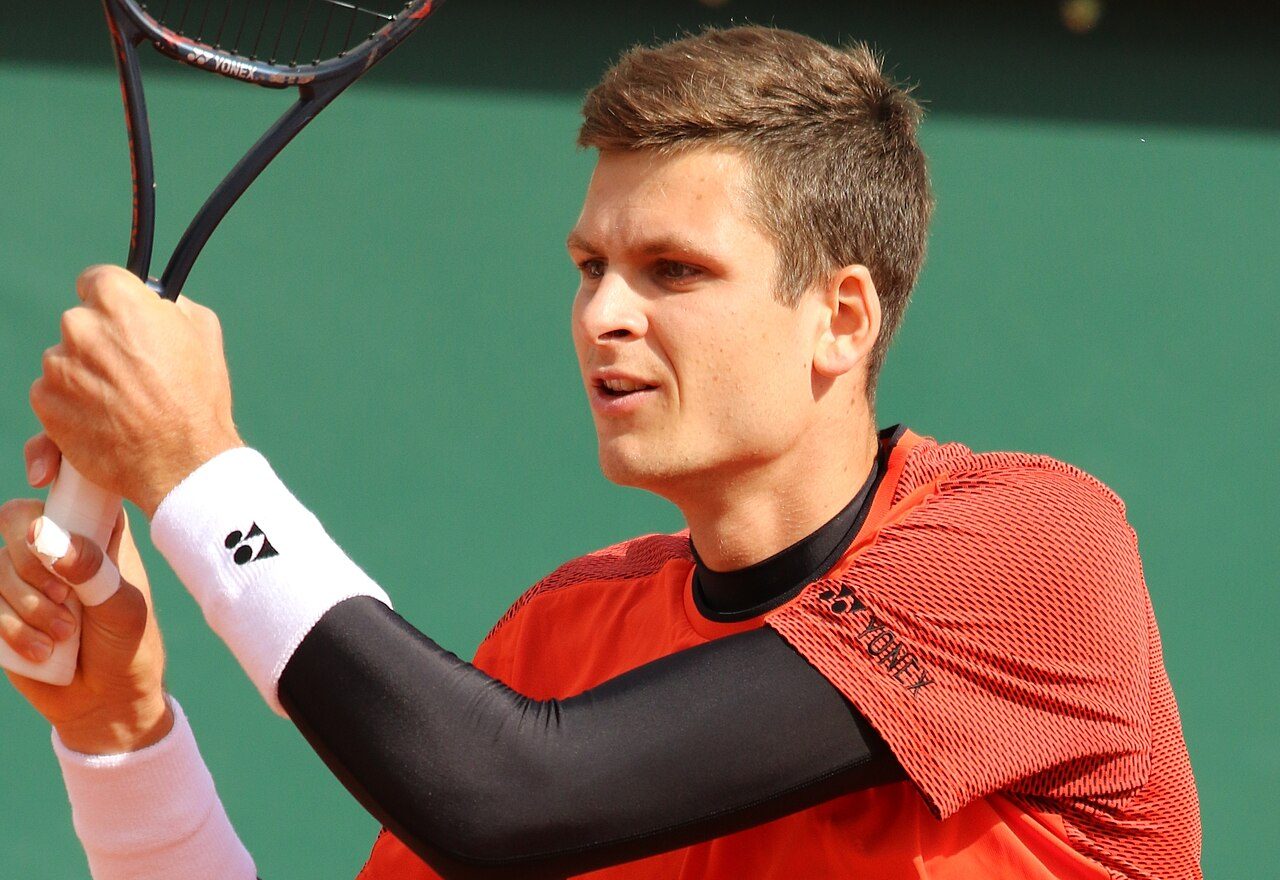
A 6-0 final set against Roger Federer on Centre Court is the scoreline most casual fans remember, but it only makes sense when placed in the longer arc of Hubert Hurkacz’s career. By the time he reached that Wimbledon quarterfinal, the tall, soft-spoken Pole had already built himself into far more than a big server. He had become one of the tour’s most reliable all-court players, a Masters 1000 champion, and a landmark figure in Polish men’s tennis.
From Wrocław to the pro tour
Hubert Hurkacz was born in Wrocław on February 11, 1997, into a family where sport was part of daily life. His mother, Zofia Maliszewska-Hurkacz, played junior tennis, and his father, Krzysztof, helped guide his early development. Tennis was hardly the only athletic influence around him. His uncle Tomasz Maliszewski played professionally, and his grandfather competed internationally in volleyball. His younger sister, Nika, also took up the sport.
He started playing at five, introduced to the game by his mother. That family setting matters because it helps explain the shape of his career. Hurkacz has rarely looked rushed, even as the level rose. His progress was steady rather than theatrical, built on repetition, discipline and a game that kept expanding.
As a junior, he reached No. 29 in the world. His best result at junior Grand Slam level came in doubles at the Australian Open, where he finished runner-up in the boys’ event alongside Alex Molcan. Even then, his profile was a little different from the standard tall prospect. The serve was there, of course, but so were touch, movement and a willingness to move forward.
Learning the job
Hurkacz turned professional in 2015, and the first stretch of his career was about accumulation: ranking points, Challenger matches, travel, adaptation. For a player standing 1.96 meters, there was an easy stereotype available. Big serve, short points, limited range. His tennis never really fit that description.
He could protect his service games, but he also defended well off the ground and changed direction smoothly for a player of his size. That combination began to show up more clearly in 2018, when he broke into the top 100 and started winning main-draw matches at the majors. The rankings rise was important, but so was the way it happened. He was no longer just promising on paper; he was becoming a factor in tour-level events.
The next season brought his first ATP title at Winston-Salem. It was a useful marker. Plenty of players can threaten for a week or two. Winning a title usually says something more lasting about nerve, endurance and the ability to handle expectation. In the same period, he moved into the top 40 and gave Polish men’s tennis a player who looked capable of pushing much higher.
The breakthrough years
The first signs of a bigger leap came in 2020. Hurkacz climbed into the top 30 and also showed his quality in doubles, winning the Paris Masters title with Felix Auger-Aliassime. That result was not a side note. It highlighted some of the traits that make him such an awkward opponent in singles too: quick hands, comfort at net and a readiness to attack when the opening appears.
Then came the season that changed his standing on the ATP Tour.
In Miami, Hurkacz put together the best run of his career to that point and won his first Masters 1000 title. It was a historic result as well as a personal one: no Polish man had previously won an ATP Masters 1000 event. The title pushed him into a different bracket of player, no longer just dangerous but established.
A few months later, on grass, he produced the deepest Grand Slam run of his career. At Wimbledon he reached the semifinals, beating Federer in the quarterfinals. The match carried extra weight afterward because it turned out to be Federer’s final appearance at a major. That fact gave the result a place in tennis memory, but for Hurkacz the bigger sporting point was simpler: he had reached the last four of a Slam and done it on a surface that suited his best instincts.
Grass has often brought out the clearest version of his game. The serve earns free points, the low bounce helps his first-strike tennis, and his touch at the net becomes even more valuable. Later that same season, he won the singles and doubles titles in Metz, becoming the first player to complete that sweep at the event. He also qualified for the ATP Finals and finished the year ranked No. 9 in the world.
Adding titles and reaching a career high
Backing up a breakthrough season is often harder than producing it. Hurkacz managed it by continuing to collect significant results rather than chasing one dramatic repeat.
In 2022, he won Halle, one of the tour’s key grass-court titles, confirming again how dangerous he can be on faster surfaces. He also reached the final in Montreal and added another Masters 1000 doubles title in Miami, this time partnering John Isner. His doubles ranking climbed as high as No. 30, a reminder that his net game is not cosmetic; it is a real part of his tennis identity.
The next major singles milestone arrived in 2023, when he won the Shanghai Masters. That gave him a second Masters 1000 singles title and underlined the durability of his level. Players can catch one hot fortnight. Winning multiple events at that tier says more. He also returned to the ATP Finals, again making the year-end championship field.
In 2024, Hurkacz added something new to his résumé by winning Estoril, his first ATP title on clay. For a player most closely associated with hard courts and grass, that mattered. It showed a broader range than his surface labels sometimes suggest. Later that season, he rose to a career-high ranking of world No. 6, the best singles ranking achieved by a Polish man in the Open Era.
Grand Slams, milestones and what stands out
Hurkacz has not won a Grand Slam title, and his best result at that level remains the Wimbledon semifinal run. Still, his record already includes several milestones that carry weight beyond a single tournament week.
He became the first Polish man to win an ATP Masters 1000 title. He later added a second at that level in singles. He reached the highest ranking any Polish man has achieved in the Open Era. And he owns one of those results that will always be attached to a larger tennis story: the Wimbledon win over Federer in the Swiss star’s final Grand Slam match.
That does not make his career a collection of isolated headlines. The more accurate picture is of a player who kept broadening his game and, with it, his ceiling.
How Hubert Hurkacz plays
The obvious starting point is the serve. Hurkacz is one of the best servers on the ATP Tour, capable of piling up aces and controlling matches through first-ball pressure. But reducing his game to that one shot misses the point.
He moves unusually well for his height, especially laterally, and he is comfortable defending until he can turn the exchange. He can rally patiently from deep positions, then suddenly shorten the point with a flat backhand, a forehand change of direction or a move to the net. On quicker courts, he is also willing to serve-and-volley, which gives his matches a slightly old-school texture at times.
His doubles success helps explain the singles package. He volleys well, reads space well and looks comfortable in the front half of the court. Tie-breaks also tend to suit him because his game is built for small margins: hold serve, apply pressure, stay calm, take the opening.
That calmness is one of his defining traits. Hurkacz rarely performs emotion for the crowd. His on-court manner is measured, sometimes almost understated, but it fits the way he competes. He does not usually look frantic, even in tight moments.
Off the court
Away from tournaments, Hurkacz has long had a low-key public image. He is based in Monaco and keeps close ties to Wrocław, the city where his tennis story began. He has generally come across as private rather than publicity-driven, which has made him a slightly unusual presence in a sport that often rewards louder personalities.
His endorsement portfolio has included Yonex, Lotos, Grupa Azoty and McLaren. Estimates of Hubert Hurkacz net worth vary by outlet, and such figures are not officially confirmed, so they are best treated as media estimates rather than hard fact. The same caution applies to reports about property holdings: some publications have claimed he has invested in real estate, but unless Hurkacz has confirmed those details himself, they remain reported information rather than verified biography.
One off-court detail that is firmly part of the public record is his charitable support for flood victims in Poland. During one campaign, he pledged donations tied to the number of aces he served, linking the strongest shot in his game to a cause at home.
Team and development
Hurkacz’s development began in the family, with his father involved early, but like most top players he has worked through different phases and voices as his career progressed. Those changes matter because his tennis has never stood still. The young prospect with a big serve became a more complete baseliner. The baseliner with reach and touch became a Masters champion. The grass-court threat grew into a player capable of winning on clay as well.
That evolution is the real thread running through his career. Not noise, not hype, just steady expansion.
FAQ
How old is Hubert Hurkacz?
He was born on February 11, 1997.
What is Hubert Hurkacz’s highest ranking?
His career-high singles ranking is world No. 6.
Has Hubert Hurkacz won a Grand Slam?
No. His best Grand Slam result is reaching the Wimbledon semifinals.
What is Hubert Hurkacz known for?
He is best known for his powerful serve, strong movement for his height and all-court style.
Where is Hubert Hurkacz from?
He is from Wrocław, Poland.
How many Masters 1000 titles has Hubert Hurkacz won?
He has won two Masters 1000 singles titles: Miami and Shanghai.
Photo: si.robi, CC BY-SA 2.0, via Wikimedia Commons