Three Grand Slam finals, one climb to world No. 2, and a long trail of clay-court wins: that is the outline of Casper Ruud’s career, but it does not quite capture how methodically he built it. Nothing about his rise felt rushed. He came through the sport with a former tour player as a father, learned the rhythms of clay early, and turned patience into a competitive advantage.
Early years in Norway
Casper Ruud was born in Oslo on December 22, 1998, and grew up in a family where elite sport was part of daily life. His father, Christian Ruud, had played professionally and later became his first coach. His mother, Lele Ruud, worked in fitness, and the household around him was active and structured rather than glamorous. He also grew up with his sisters, Caroline and Charlotte.
He started playing tennis as a small child at Snarøya Tennisclub, and that setting mattered. Ruud did not emerge from a country with a deep men’s tennis tradition, so much of his development came through close family guidance and a steady training base. He also played football, ice hockey and golf when he was young, which helps explain the balance and movement that later became central to his game.
By the time he reached the junior circuit, he was already more than a local prospect. In January 2016, he became the first Norwegian to rise to No. 1 in the junior rankings. That same season he won the Osaka Mayor’s Cup and began making the transition into senior events, collecting his first Futures title and then the Challenger title in Seville. It was an early sign of the pattern that would define his career: progress in clear stages, each one earned.
Learning the tour
His first years on the professional circuit were not built on sudden stardom. They were built on accumulation.
In 2015, Ruud started playing more regularly at pro level. The breakthrough result that made the wider tour take notice came in 2017, when he reached the semifinals of the Rio Open, an ATP 500 event on clay. He was still a teenager, and the run suggested that his heavy forehand and comfort in long rallies could already trouble established players.
The next milestone arrived at the majors. In 2018, he qualified for the Australian Open, his first Grand Slam main draw. Later that year came an important career decision: he began working with the Rafa Nadal Academy in Mallorca. The fit was obvious. Ruud already preferred clay, already played with shape and margin, and already looked comfortable constructing points patiently from the baseline. The academy sharpened those instincts rather than trying to remake him.
In 2019, he reached his first ATP final in Houston, broke into the top 100, and qualified for the Next Gen ATP Finals. By then, his identity as a player was clear. He was not trying to overwhelm opponents with first-strike tennis. He was trying to outlast them, push them back, and make the court feel smaller.
First ATP title and the move into the top 10
A first tour title often changes how a player is seen, and Ruud’s came with national significance. In Buenos Aires in 2020, he won his first ATP singles title, becoming the first Norwegian man to do so in the Open Era. He also moved into the top 50 that season.
Then came the year that changed his standing on tour.
Ruud won five ATP titles in 2021, Geneva, Bastad, Gstaad, Kitzbühel and San Diego. Four came on clay, which was no surprise. The fifth, in San Diego on hard court, mattered for a different reason: it showed his game was broadening. He was no longer simply a dangerous clay-courter. He was becoming a regular threat across the schedule.
That season also brought another national first when he broke into the top 10. For a player from Norway, a country with limited history at the top of men’s tennis, it was a major step. Ruud had not arrived there through one hot month or one favorable draw. He got there through consistency, scheduling discipline and a game he trusted completely.
The season that changed everything
The biggest shift in his career came in 2022.
At Roland Garros, Ruud made his first Grand Slam final. He beat Jo-Wilfried Tsonga, Emil Ruusuvuori, Lorenzo Sonego, Hubert Hurkacz, Holger Rune and Marin Čilić before losing to Rafael Nadal in the championship match. Nadal won 6-3, 6-3, 6-0, and the result underlined the gap that still existed between Ruud and one of the greatest clay-court players the sport has seen. But the run itself changed his status.
A few months later, he went even deeper into the center of the sport. At the US Open, Ruud reached another major final, this time against Carlos Alcaraz, with the world No. 1 ranking also on the line. Alcaraz won in four sets, 6-4, 2-6, 7-6, 6-3. Ruud left New York without the trophy, but with confirmation that his game could hold up on the biggest hard-court stage too.
He was not done. At the ATP Finals in Turin, he reached the final before losing to Novak Djokovic. Soon after, on September 12, 2022, he climbed to a career-high ranking of world No. 2, the highest ever achieved by a Norwegian player.
That year did not make him a different player. It made the rest of the tennis world see more clearly what he already was.
Back to Paris, then a new level at Masters 1000
One strong season can be dismissed as timing. Repeating it is harder.
Ruud returned to the French Open final in 2023, beating players including Nicolás Jarry, Holger Rune and Alexander Zverev before losing to Djokovic in the title match, 7-6, 6-3, 7-5. He also won the title in Estoril that year. More importantly, the second Paris final confirmed that his 2022 breakthrough had not been a one-off. On clay, especially over two weeks, he had become one of the most reliable men in the draw.
He stayed productive the following season as well, winning in Barcelona and Geneva. Those titles fit the familiar profile of his career: strong work on clay, efficient weeks, few wasted matches. He also reached the quarterfinals at the Olympic tournament, another solid result in a career built less on noise than on repeat high-level performance.
A major missing line on his résumé was a Masters 1000 title. He filled it in by winning Madrid, becoming the first Norwegian to claim a trophy at that level. For a player long described as steady, disciplined and very good on clay, it was another step upward: not just consistency, but a title from one of the biggest regular events on the calendar.
Grand Slam record and Norwegian place in the game
Ruud has not won a major singles title, but his record at the Slams still stands apart in Norwegian tennis history. He was the first man from his country to reach a Grand Slam singles final, and he did it three times: Roland Garros in 2022, the US Open in 2022, and Roland Garros again in 2023.
Those finals came against Nadal, Alcaraz and Djokovic, three very different opponents, all elite, all demanding different solutions. Ruud did not find enough in those matches to take a title, but reaching them placed him in company no Norwegian male player had reached before.
How Casper Ruud plays
His best surface is clay, and the reasons are easy to see. Ruud is a right-hander with a two-handed backhand, but the forehand drives his tennis. It is heavy with topspin, especially cross-court, and he uses it to pin opponents behind the baseline and open space gradually rather than all at once.
What makes the game effective is not just spin. It is discipline. He is willing to rally, willing to reset points, and willing to trust patterns over improvisation. On clay, that patience becomes a weapon. On hard courts, it has become more useful as he has improved his serve, court position and ability to finish shorter balls.
He is often described as a baseliner, which is true, but that can sound flatter than the reality. Ruud’s tennis has shape. He plays with height, margin and physical commitment, and he rarely looks rushed emotionally. That calm has been one of the constants of his rise.
Off the court
Away from tournaments, Ruud’s public image has remained notably low-drama. Family has stayed central to his career, with Christian Ruud continuing as a key coaching figure. Pedro Clar has also been part of his coaching team.
His private life is public only in limited, clearly acknowledged ways. Ruud has shared that he is engaged to Maria Galligani, and their engagement became public in late 2024. Beyond that, there is little reason to turn his off-court life into gossip; his profile has generally been more grounded than celebrity-driven.
He has also built a commercial portfolio through endorsements and partnerships, including deals with Yonex and Porsche, among others. Reports on Casper Ruud net worth vary by outlet and should be treated as estimates rather than fixed fact. Prize money, by contrast, is public and trackable through official tennis sources.
One off-court distinction that fits his reputation came in 2022, when he received the ATP Sportsmanship Award. It matched the way he is generally viewed around the tour: professional, measured and rarely theatrical.
FAQ
How old is Casper Ruud?
He was born on December 22, 1998.
What is Casper Ruud’s highest ranking?
His career-high singles ranking is world No. 2, reached on September 12, 2022.
Has Casper Ruud won a Grand Slam?
No. He has reached three Grand Slam singles finals: the French Open in 2022 and 2023, and the US Open in 2022.
Who coaches Casper Ruud?
Christian Ruud has long been his main coach, and Pedro Clar has also been part of his coaching setup.
What is Casper Ruud’s best surface?
Clay is widely considered his best surface, and most of his biggest title runs have come there.
Is Casper Ruud married?
No. He is engaged to Maria Galligani.
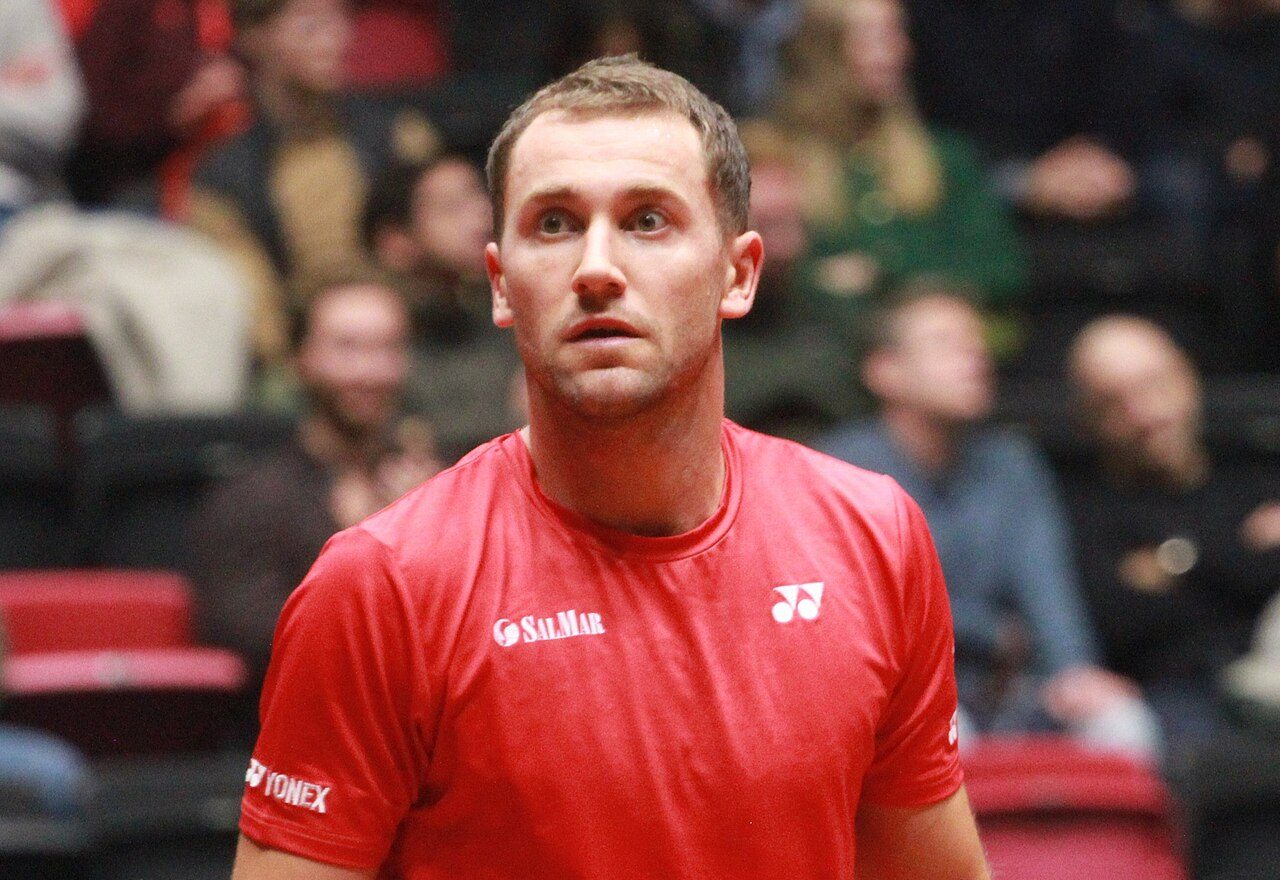
Photo: Stein Langørgen, CC BY 4.0, via Wikimedia Commons