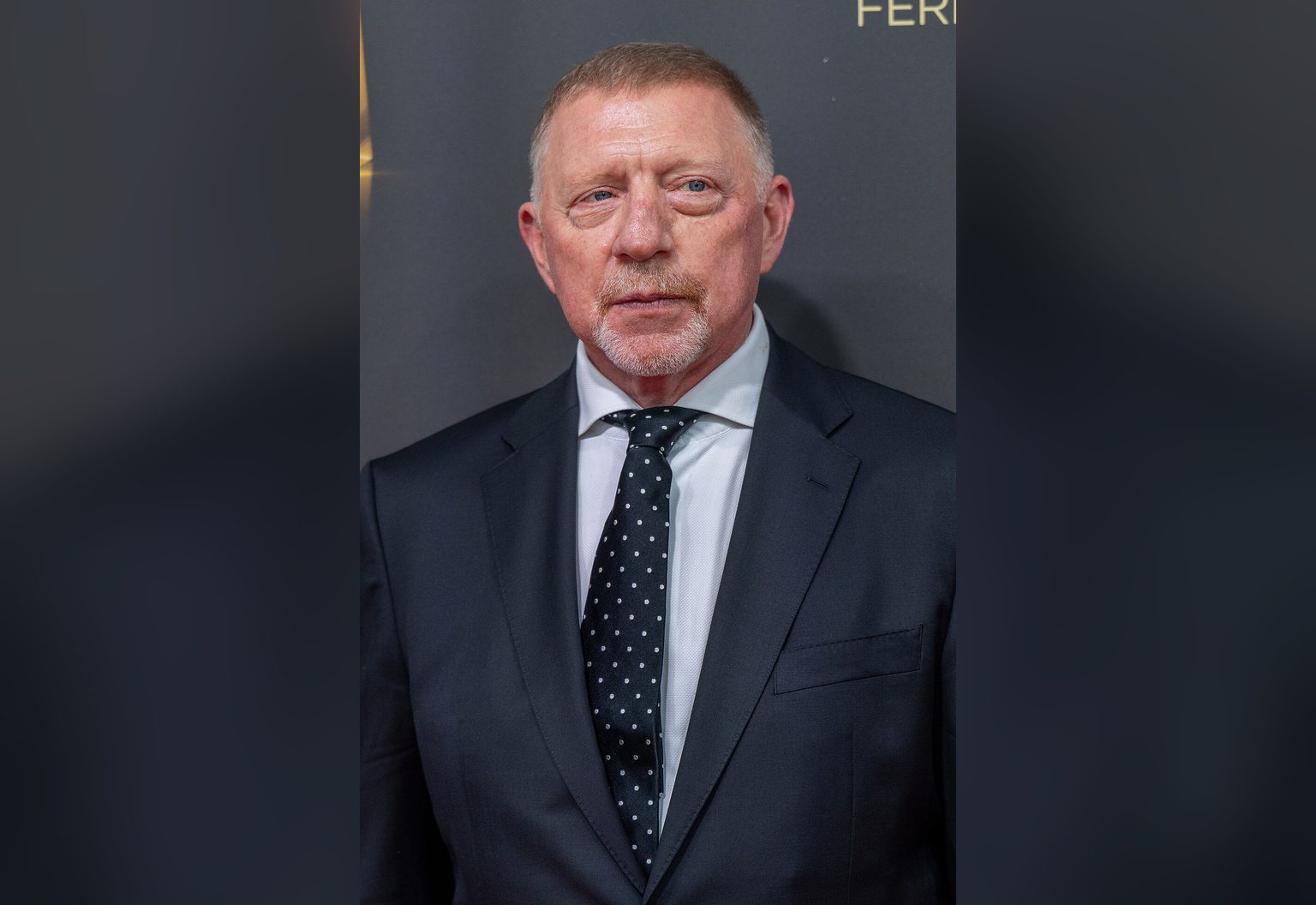
At 17 years, 7 months and 15 days, Boris Becker dived across Wimbledon’s grass and into a place no younger men’s singles champion has occupied. His victory over Kevin Curren in the 1985 final made the unseeded teenager from West Germany an international name.
Wimbledon remained the thread running through his career, but it was not the whole story. He won six Grand Slam singles titles, reached world No. 1 and later helped coach Novak Djokovic through six major victories. Beyond tennis came broadcasting, family life and financial troubles that eventually led to imprisonment.
From Leimen to the professional tour
Born on November 22, 1967, in Leimen, West Germany, Becker grew up close to the courts. His father, Karl-Heinz, an architect, helped establish the local tennis facility where he learned to play.
He left school to pursue tennis and turned professional in 1984. Under coach Günther Bosch, the teenager developed a game that was difficult to overlook: a heavy serve, forceful volleys and an eagerness to throw himself after balls that seemed beyond reach.
At 1.91 metres tall, he had the reach and power to make attacking tennis work. What stood out just as much was his willingness to commit. Once he moved forward, there was little hesitation.
The teenager who changed Wimbledon
Before Wimbledon in 1985, Becker won his first tour singles title at Queen’s Club. It was a meaningful warning, though hardly anyone expected what followed.
At the All England Club, he survived five-set matches against Joakim Nyström and Tim Mayotte before beating Henri Leconte and Anders Järryd to reach the final. Against Curren, he won 6-3, 6-7, 7-6, 6-4.
He became Wimbledon’s first unseeded men’s singles champion and its youngest. The sight of a red-haired teenager launching himself across Centre Court gave the tournament an unmistakable new presence.
The following summer supplied an important answer: this was not a single extraordinary fortnight. Becker defeated world No. 1 Ivan Lendl in straight sets to retain the championship.
Those victories also straddled a small piece of Wimbledon history. The tournament used white balls for his first title and switched to yellow in 1986.
His serve brought the nickname “Boom Boom,” although that shorthand missed the touch and reactions behind his net play. Power opened the court; anticipation often finished the point.
Edberg, Lendl and a place at the top
A second-round defeat to Peter Doohan at Wimbledon in 1987 showed how quickly expectations had changed. At 19, Becker was no longer the surprise package. He was the defending champion whose early exit became a major story.
Stefan Edberg soon emerged as his defining Wimbledon opponent. They contested three consecutive finals from 1988 to 1990: Edberg won the first and third, Becker the one between.
Both attacked the net, but their games had different textures. Edberg moved forward behind a kicking serve and exceptionally controlled volleys. Becker brought heavier hitting and a more explosive presence.
The 1989 season extended his success beyond London. After reclaiming Wimbledon, he beat Lendl in the US Open final, winning his only singles title in New York. Lendl finished their overall rivalry with an 11-10 advantage, but Becker won all five of their Grand Slam meetings.
Team competition mattered too. He helped West Germany win consecutive Davis Cups in 1988 and 1989, delivering in an environment that suited his appetite for pressure.
At the 1991 Australian Open, victory over Lendl brought a fourth major title. On January 28, Becker reached world No. 1 for the first time. He would spend 12 weeks there across two spells.
That summer, compatriot Michael Stich beat him in the Wimbledon final. A year later, they were partners rather than opponents, winning men’s doubles gold at the Barcelona Olympics.
The last major and the long goodbye
Indoor tennis remained particularly productive. Becker won the season-ending Masters or ATP Tour World Championships in 1988, 1992 and 1995, using his serve and attacking instincts to pressure the strongest fields.
In 1995, he reached a seventh Wimbledon final. Pete Sampras recovered from losing the opening set to beat him, illustrating the changing balance at the tournament Becker had first won a decade earlier.
There was still another major left. At the 1996 Australian Open, he lost the first two sets of his opening match against Jean-François Răducanu before recovering to win. By the final, against Michael Chang, his game was working far more cleanly. He won in four sets.
It completed a collection of three Wimbledon titles, two Australian Opens and one US Open. Roland Garros remained out of reach: he made three semifinals in Paris but never won a tour-level singles title on clay.
After playing a reduced schedule late in his career, Becker made his final Wimbledon appearance in 1999, losing to Pat Rafter in the fourth round. He retired with 49 tour singles titles and 15 doubles titles. Four of those singles trophies came at Queen’s Club, the setting for his first breakthrough.
More than a big serve
Becker’s tennis was built to shorten points, not simply to hit through opponents. His serve forced weak returns, his volleys took time away, and his willingness to move inside the baseline prevented opponents from settling.
The diving volleys became his signature image. Less spectacular, but equally important, were the returns, low volleys and passing shots that made him dangerous when an opponent reached the net first.
His one-handed backhand could drive through the ball or cut underneath it. Grass and indoor carpet rewarded the whole package: power, quick decisions and forward movement.
Coaching from the other side of the court
In December 2013, Djokovic appointed Becker as head coach. Working alongside long-time coach Marián Vajda, he brought the experience of someone who understood both major finals and the scrutiny surrounding a world No. 1.
Across the 2014-2016 seasons, Djokovic won six Grand Slam titles. The partnership ended in December 2016, after a period that included Djokovic’s first French Open victory and completion of his career Grand Slam.
Becker later coached Holger Rune, beginning in October 2023 and stepping away in February 2024. Broadcasting also kept him close to the sport, including work for the BBC and Eurosport.
Family, poker and life away from tennis
His private life frequently received as much attention as his results. He married Barbara Feltus in 1993, and they had two sons, Noah and Elias, before divorcing in 2001.
His daughter Anna Ermakova was born in March 2000. In 2009, he married Dutch model Sharlely “Lilly” Kerssenberg; their son Amadeus was born in 2010. The couple separated in 2018. Becker married Lilian de Carvalho Monteiro in Italy in September 2024.
Away from the family headlines, poker became another competitive outlet. He played tournament poker and held promotional roles with poker companies, taking a familiar sporting personality into a different kind of contest.
He also supported charitable causes. In 1989, he donated £25,000 in prize money from the Wirral International tournament to the Hillsborough Disaster Fund. His wider involvement has included membership of the Laureus World Sports Academy.
Convictions, bankruptcy and prison
The financial and legal problems were substantial. In October 2002, a Munich court convicted Becker of tax evasion. He received a suspended two-year prison sentence, a €300,000 fine and an order to pay €200,000 to charity.
He was declared bankrupt in London in June 2017. In April 2022, he was convicted of four offences under the Insolvency Act relating to his failure to disclose assets and debts during the bankruptcy proceedings.
The sentence was two and a half years in prison. He served roughly eight months before being released and deported to Germany in December 2022.
His bankruptcy discharge was approved in April 2024. That ended the bankruptcy restrictions, not the earlier criminal conviction: they were separate legal matters.
FAQ
How many Grand Slam titles did Boris Becker win?
He won six singles majors: Wimbledon in 1985, 1986 and 1989; the Australian Open in 1991 and 1996; and the US Open in 1989.
How old was he when he first won Wimbledon?
He was 17 years, 7 months and 15 days old in 1985. He remains the youngest Wimbledon men’s singles champion.
Was Becker ever world No. 1?
Yes. He first reached No. 1 on January 28, 1991, and held the ranking for 12 weeks in total.
When did he retire?
He retired in 1999, finishing his Wimbledon career with a fourth-round defeat to Pat Rafter.
Did he coach Novak Djokovic?
Yes. Appointed in December 2013, he coached Djokovic through the 2014-2016 seasons, during which Djokovic won six Grand Slam titles.
Why did Boris Becker go to prison?
He was convicted in 2022 of four offences connected with concealing assets and failing to disclose debts during bankruptcy proceedings. He served roughly eight months.
Photo: Superbass, CC BY-SA 4.0, via Wikimedia Commons