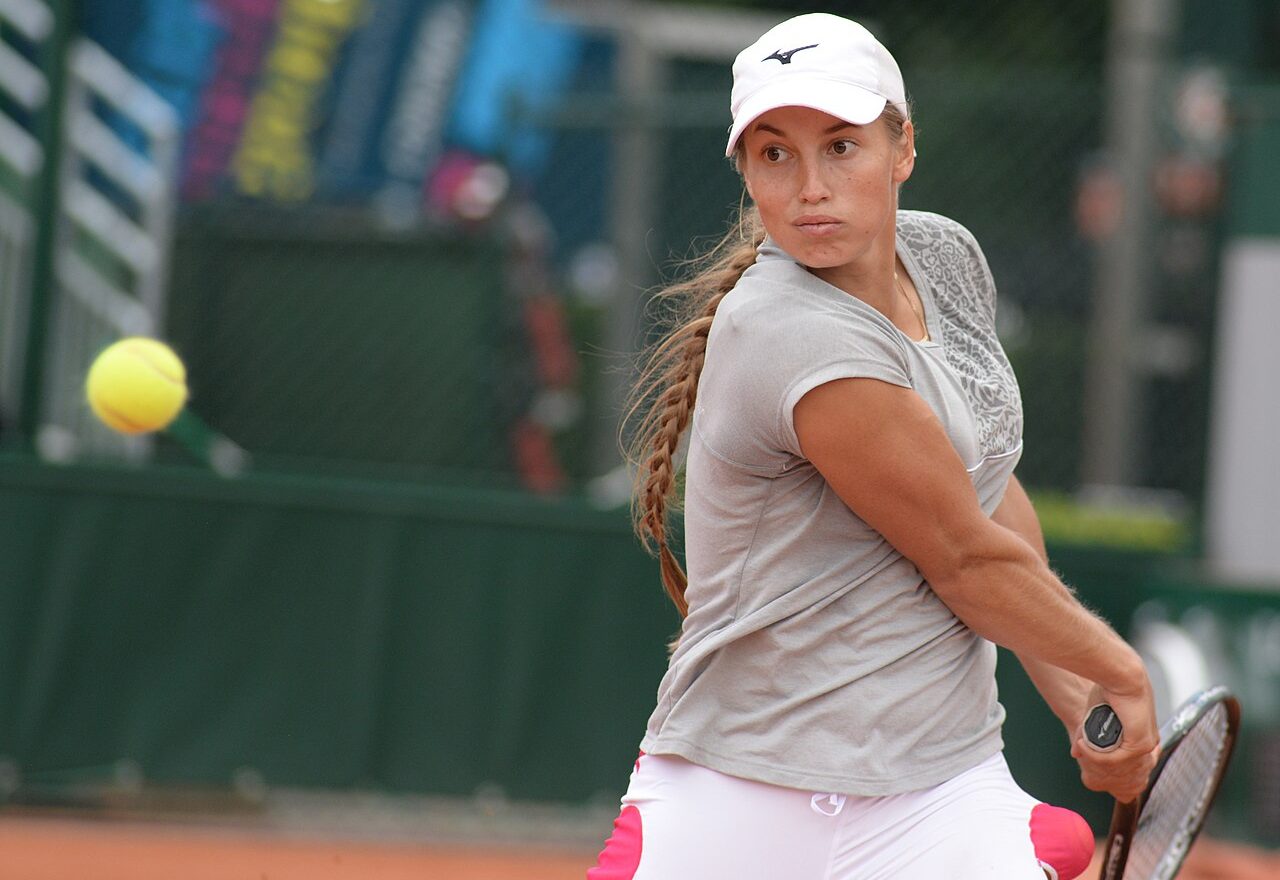
At Wimbledon in 2024, Yulia Putintseva lost the opening set to world No. 1 Iga Swiatek, then conceded only three more games. Her 3-6, 6-1, 6-2 victory was a sharp demonstration of what makes her difficult to play: quick feet, changing rhythms and a willingness to keep asking different questions.
The result came shortly after her first grass-court title in Birmingham. For a player whose early successes had been built largely on clay, it opened another chapter in a career that began in Moscow and developed under the flag of Kazakhstan.
From Moscow courts to junior Grand Slam finals
Born on January 7, 1995, Yulia Antonovna Putintseva began playing tennis at five. Her father, Anton, introduced her to the sport at Moscow’s Spartak Tennis Club. Her development later took her to the Mouratoglou Tennis Academy in France.
Her father’s approach extended beyond hitting balls. Chess and Russian card games were part of her early education in strategy, an unusually fitting background for someone who would make a living by disrupting opponents’ plans.
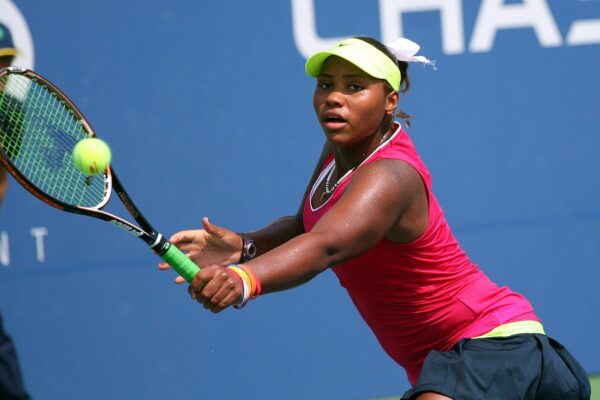
Putintseva began competing professionally in 2009 while still working her way through junior tennis. The results soon justified the demanding schedule. She reached the 2010 US Open girls’ singles final, losing to Daria Gavrilova, and made another junior major final at the 2012 Australian Open, where Taylor Townsend beat her.
She climbed to junior world No. 3 in May 2012. By then, she also had a foothold in the senior game: her first ITF singles title had come at a $25,000 tournament in Moscow in 2011.
A new flag and a place on the WTA Tour
Her WTA main-draw debut came in Copenhagen in 2012. That June, she switched her sporting allegiance from Russia to Kazakhstan, a decision that would shape the rest of her international career.
She made her Grand Slam main-draw debut at the 2013 Australian Open and immediately won a match, beating Christina McHale before losing to Carla Suárez Navarro. From 2014, she also represented Kazakhstan in the team competition then known as the Fed Cup, now the Billie Jean King Cup.
Progress was not built around a huge serve or easy winners. At 1.63 metres tall, Putintseva had to earn her position through movement, anticipation and the ability to make rallies uncomfortable.
Clay gave those qualities room to work. At Roland Garros in 2016, she reached her first Grand Slam quarterfinal without dropping a set.
She was not the first woman representing Kazakhstan to reach that stage: Yaroslava Shvedova had already done so at the French Open in 2010. Nevertheless, it was a substantial breakthrough for Putintseva, particularly because of what happened next.
Facing defending champion Serena Williams, she took the first set before losing 5-7, 6-4, 6-1. Williams eventually found a way through, but the match showed that Putintseva’s game could trouble an opponent with far greater power.
Turning deep runs into titles
Her first WTA singles final followed in St. Petersburg in 2017. She beat Svetlana Kuznetsova and Dominika Cibulkova during the tournament before falling to Kristina Mladenovic in three sets.
A second French Open quarterfinal in 2018 confirmed that her earlier Paris run had not been an isolated result. This time, Madison Keys ended her tournament.
The missing piece was a tour title. Putintseva collected it in Nuremberg in 2019, coming from a set down to defeat Tamara Zidansek in the final. After years of navigating qualifying draws, lower-level events and difficult tour matches, she had a WTA singles trophy.
Her next major run came on a different surface. At the 2020 US Open, she reached the quarterfinals before losing to Jennifer Brady, who went on to the semifinals. It was her third Grand Slam quarterfinal and her first outside Roland Garros.
Budapest brought a second WTA title in 2021. She beat Anhelina Kalinina in straight sets in the final, adding another clay-court championship to her record.
Those results reflected her comfort on slower courts, but they did not define the limits of her game.
Birmingham, Wimbledon and a top-20 milestone
Grass rewards a different set of instincts: quicker decisions, lower bounces and less time to recover. Putintseva adapted in Birmingham in 2024, beating Ajla Tomljanovic in the final to claim her third WTA singles title.
She carried that form into Wimbledon. Against Swiatek in the third round, she changed direction, defended stubbornly and made the top seed play extra shots. After losing the opening set, she took control of the match.
The victory put her into Wimbledon’s fourth round for the first time. Jelena Ostapenko stopped her there, but the fortnight had changed the shape of her grass-court record.
Another significant win followed in Cincinnati, where she defeated defending champion Coco Gauff. At the same tournament, she partnered Leylah Fernandez to reach the doubles final.
Rather than one sustained rivalry, her career has featured recurring tests against the tour’s leading players. Williams, Swiatek and Gauff presented very different problems; her best performances against them came from adapting rather than trying to overpower them.
On January 27, 2025, she reached a career-high singles ranking of world No. 20.
How Putintseva makes opponents uncomfortable
Putintseva plays right-handed with a two-handed backhand, but those basic details reveal little about the experience of facing her.
She can absorb pace, retrieve a ball that looks beyond reach and then change the rally with a drop shot. She varies height and speed, uses angles and looks for opportunities to move forward. Her defense matters, but describing her only as a defensive player misses the intent behind those changes.
The aim is often to deny an opponent a comfortable rhythm. A hard hitter may find herself having to generate pace from an awkward position; a patient baseliner may suddenly have to sprint towards the net.
Her emotions are similarly visible. Frustration, encouragement and animated exchanges have long been part of her on-court presence.
That expressiveness has also brought criticism. During her third-round defeat by Jasmine Paolini at the 2024 US Open, she allowed two balls tossed by a ball girl to pass without collecting them. Putintseva subsequently apologized publicly, saying her frustration had been with her own performance rather than the ball girl.
Away from the match court
The quieter details of her life offer a contrast to that public intensity. Her listed interests include chess, Sudoku, dancing and music: some competitive, some simply a way to switch off.
Her father’s early involvement provides a thread between those interests and her tennis. The child learning to think several moves ahead became a professional whose strongest matches often depend on recognizing patterns and changing them before an opponent settles.
She speaks Russian and English and has spent time based in Florida as well as Moscow. Her social media gives supporters a selective glimpse of training, travel and life between tournaments, rather than a complete account of her private life.
Putintseva has also worked with Italian coach Matteo Donati. As with many players, the people around her have changed over the course of a long professional career; the more consistent feature is the problem-solving approach she takes onto court.
FAQ
What is Yulia Putintseva’s nationality?
She represents Kazakhstan. She was born in Moscow, Russia, and switched her sporting allegiance in June 2012.
When was she born, and how tall is she?
She was born on January 7, 1995, and is listed at 1.63 metres, or approximately 5 feet 4 inches.
Which WTA singles titles has she won?
Her first three WTA singles titles came in Nuremberg in 2019, Budapest in 2021 and Birmingham in 2024. The first two were on clay; Birmingham was on grass.
What is her highest singles ranking?
She first reached world No. 20 on January 27, 2025.
What are her best Grand Slam results?
Her record includes quarterfinal appearances at the French Open in 2016 and 2018, and at the US Open in 2020.
Has she beaten Iga Swiatek?
Yes. She defeated Swiatek, then world No. 1, in the third round of Wimbledon in 2024, winning 3-6, 6-1, 6-2.
Photo: Tatiana from Moscow, Russia, CC BY-SA 2.0, via Wikimedia Commons