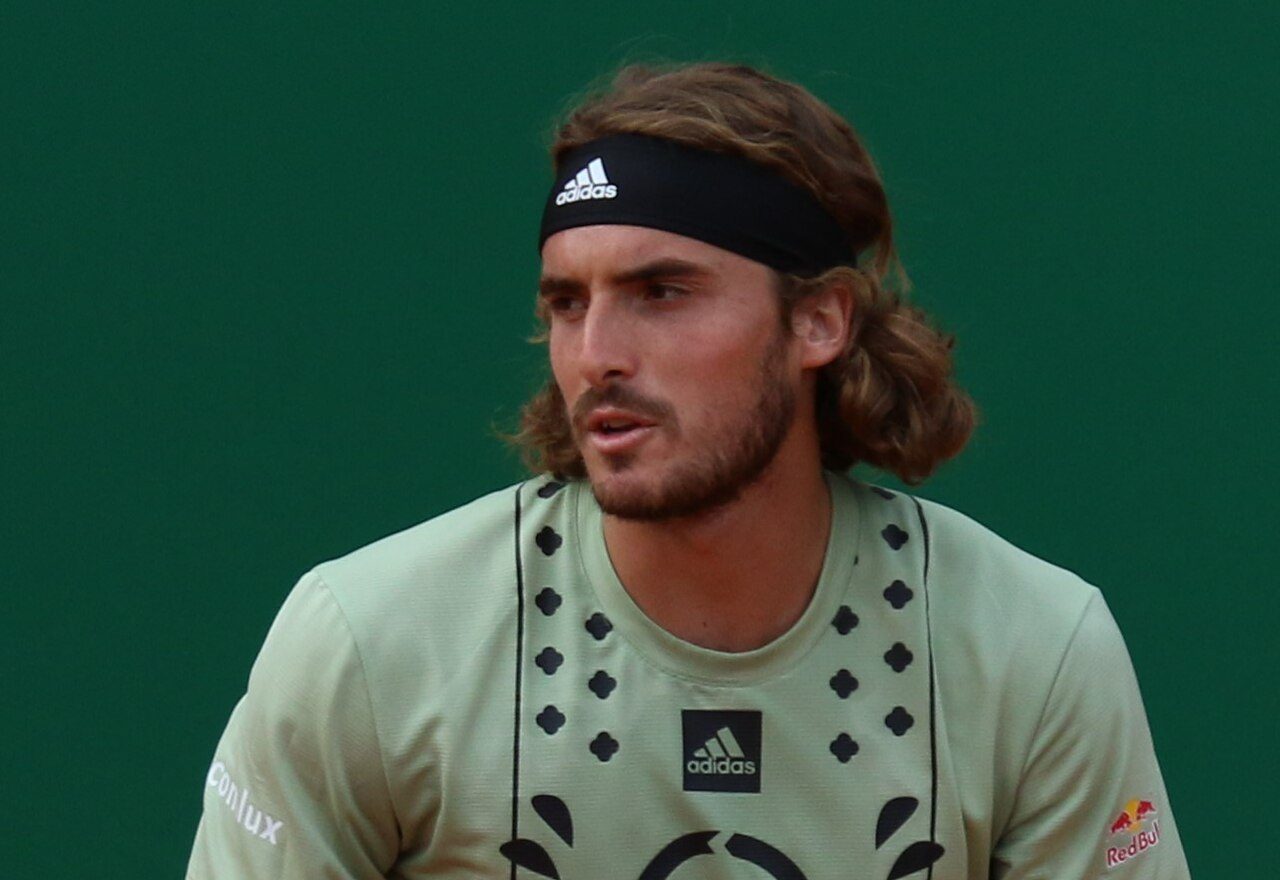
At 20, Stefanos Tsitsipas walked into the Australian Open and beat Roger Federer in four sets. It was the kind of win that changes how a player is seen overnight, but it did not come from nowhere. By then, the Greek had already built a reputation as one of the most gifted young players on the ATP Tour, with a classical one-handed backhand, a heavy forehand and the nerve to take on the biggest names.
His career has unfolded with both speed and complication. Tsitsipas rose to world No. 3, won the ATP Finals, reached two Grand Slam finals and became the highest-ranked Greek man in tennis history. He has also had stretches where the final step at the majors stayed just out of reach.
A tennis family in Athens
Born on August 12, 1998, in Athens, Tsitsipas grew up in a household where tennis was not a hobby but the family language. His father, Apostolos Tsitsipas, became a central figure in his development as coach, while his mother, Julia Apostoli, also had a strong tennis background. His younger siblings, Petros, Pavlos and Elisavet, all played as well, so the sport was woven into daily life from the start.
He first picked up a racket as a small child and trained at the Glyfada Tennis Club near Athens. There was athletic pedigree beyond tennis too: his maternal grandfather, Sergei Salnikov, was an Olympic gold medal-winning footballer with the Soviet Union in 1956.
That background helps explain the ease with which Tsitsipas seemed to grow into competition. As a junior, he did not simply show promise; he produced results. In 2016, he reached junior world No. 1 and won the Wimbledon boys’ doubles title. He also began his professional career that year, moving from junior standout to full-time tour prospect.
The first surge on the ATP Tour
The breakthrough season was 2018. Tsitsipas reached the final in Barcelona, beat top players more regularly and announced himself as more than a stylish prospect. By the end of the year, he won the Next Gen ATP Finals, a title designed to spotlight the sport’s rising names.
Then came the run that pushed him into the center of the conversation. At the 2019 Australian Open, he defeated Federer in the fourth round and reached his first Grand Slam semifinal before losing to Rafael Nadal. It was a landmark result for Greek tennis and a clear sign that Tsitsipas could handle the pace and pressure of the biggest stages.
Later that same season, he delivered one of the most important titles of his career by winning the ATP Finals in London. He beat Dominic Thiem in the championship match and became the youngest winner of the event since Lleyton Hewitt. For a player from a country with little history at the top of the men’s game, it was a major step.
Close to a major, twice
The biggest prizes have defined Tsitsipas as much by absence as by proximity. He has not won a Grand Slam title, but he has come close enough to show that the level is there.
His first major final arrived at Roland Garros in 2021. That run mattered well beyond his own résumé: he became the first Greek player, man or woman, to reach a Grand Slam singles final. In the final, he led Novak Djokovic by two sets before Djokovic came back to win in five. It was a painful loss, but also the clearest proof yet that Tsitsipas could sustain elite tennis over two weeks on clay.
A few weeks later, on August 9, 2021, he climbed to a career-high ranking of world No. 3, still the best mark achieved by a Greek man.
His second Grand Slam final came at the 2023 Australian Open. Once again, Djokovic was waiting at the end, and once again Tsitsipas finished runner-up. The pattern became hard to ignore: deep runs, big-match quality, but the same opponent often blocking the door.
Monte Carlo, clay-court authority and week-to-week consistency
If the majors have brought near-misses, the Masters level has offered some of his cleanest statements. Monte Carlo has been especially good to him. Tsitsipas won the title there in 2021, defended it in 2022 and lifted it again in 2024, confirming how dangerous he can be on clay when his forehand is dictating and his serve is setting up short points.
Those titles were not isolated flashes. Across multiple seasons, he remained a regular presence near the top of the sport and collected tour titles on different surfaces. He won at least one ATP singles title every year from 2018 through 2024, a strong measure of consistency even without a major trophy.
In doubles, he has also had some success, reaching a career-high ranking of No. 64 in August 2022 and winning ATP doubles titles, though singles has always been the center of his story.
Setbacks, coaching changes and a dip in results
Careers at the top rarely move in a straight line, and Tsitsipas has had periods where his level and ranking slipped. Physical issues, including back trouble, became part of the conversation during the middle phase of his career, especially because his game depends so much on explosive serving, rotation through the forehand and confidence moving forward.
His coaching situation has also drawn attention over the years because of the close and sometimes visibly tense dynamic with his father. Apostolos Tsitsipas was a constant presence for much of his rise, though their on-court relationship became a recurring talking point during difficult stretches.
Even with those fluctuations, Tsitsipas remained relevant at the biggest events. At the Paris Olympics, he reached the quarterfinals, another solid result on a stage where tennis careers are often measured differently.
Rivalries that shaped his era
Some players are defined by titles; others by the opponents who kept appearing in their path. Tsitsipas belongs partly to the second group.
Djokovic has been the most significant obstacle, not only because of the head-to-head but because both of Tsitsipas’s Grand Slam final losses came against him. Daniil Medvedev has been another central rival, with their matches carrying extra edge and producing some of the more memorable exchanges of Tsitsipas’s career. Alexander Zverev and Andrey Rublev have also been regular contemporaries in the same tier, players he has beaten often enough to show his class but not so consistently that the rivalry ever felt settled.
That is one reason Tsitsipas has remained an interesting figure on tour. His record against top players shows he belongs in that company, even if the very biggest prizes have been harder to secure.
How Stefanos Tsitsipas plays
There are not many top men left with a one-handed backhand, and that alone makes Tsitsipas stand out. But his game is not a museum piece. He mixes that traditional stroke with a modern first-strike approach built around a heavy topspin forehand, a strong serve and a willingness to finish at the net.
When he is playing well, the pattern is clear. He serves big, looks for the forehand early and uses his reach to take space away from opponents. The volley is a real part of his game, not an occasional flourish, and that gives him more variety than many baseline-heavy players.
Clay has often brought out his best because it gives him time to shape points and use the forehand, but he has also produced major results on hard courts, especially in Melbourne. Grass has not delivered the same level of success, despite his comfort moving forward and his long-standing affection for the surface.
Like many attacking players, his form can look dramatically different from week to week. When the serve lands and the forehand is driving through the court, he can control matches quickly. When those shots drift, the backhand wing can come under pressure and the whole structure of his game becomes harder to protect.
Off court: creative interests, family ties and public scrutiny
Away from tournaments, Tsitsipas has long projected a more reflective image than the standard athlete profile. He has spoken often about photography, video work and other creative interests, and he built an audience through YouTube vlogs that showed travel, training and life on tour. He also launched the podcast A Greek Abroad, another sign that he wanted an identity beyond rankings and results.
He speaks Greek, English and Russian, reflecting his family background and international upbringing in the sport. He has also been associated with Monte Carlo, a common base for top players on the ATP circuit.
One of the most personal stories attached to his life is not rumor but his own account: in 2015, he nearly drowned while swimming in Crete and was saved by his father. Tsitsipas has said the incident changed his perspective.
His relationship with Spanish player Paula Badosa became public in 2023 and quickly turned into a regular topic around the tour. Because private life can easily slide into gossip, it is best kept to what was openly acknowledged by the players themselves: they were in a public relationship for a period, and later indicated that they had separated.
Commercially, Tsitsipas has been a prominent figure, with sponsorship deals that have included brands such as Adidas, Wilson, Rolex and Red Bull. Estimates of Stefanos Tsitsipas net worth and endorsement income vary by outlet, so those figures should be treated as media estimates rather than confirmed personal financial disclosures.
He has also been linked in reports to business interests beyond standard sponsorships. Any suggestion that a brand partnership includes ownership stakes remains unconfirmed unless stated by the player or the company, so that kind of claim should be treated as speculation, not fact.
Tsitsipas has done charitable work as well, including ambassador roles connected to children’s causes and the Princess Charlene of Monaco Foundation.
He has not avoided controversy entirely. During the US Open in 2021, Alexander Zverev and Daniil Medvedev were among the players who publicly complained about his lengthy bathroom breaks and suggested coaching might be involved. Those were accusations and complaints from rivals, not proven rule violations, but the episode became part of the wider debate around coaching and gamesmanship in men’s tennis.
FAQ
How old is Stefanos Tsitsipas?
He was born on August 12, 1998.
What is Stefanos Tsitsipas’s highest ranking?
His career-high singles ranking is world No. 3, reached on August 9, 2021.
Has Stefanos Tsitsipas won a Grand Slam?
No. He has reached two Grand Slam singles finals: the 2021 French Open and the 2023 Australian Open.
Who coached Stefanos Tsitsipas?
For much of his career, his father Apostolos Tsitsipas was his coach and the most important figure in his player box.
Where is Stefanos Tsitsipas from?
He was born in Athens, Greece, and became the highest-ranked Greek man in tennis history.
What is Stefanos Tsitsipas known for off the court?
He is known for his YouTube content, photography, podcasting and a thoughtful public persona away from matches.
Photo: si.robi, CC BY-SA 2.0, via Wikimedia Commons