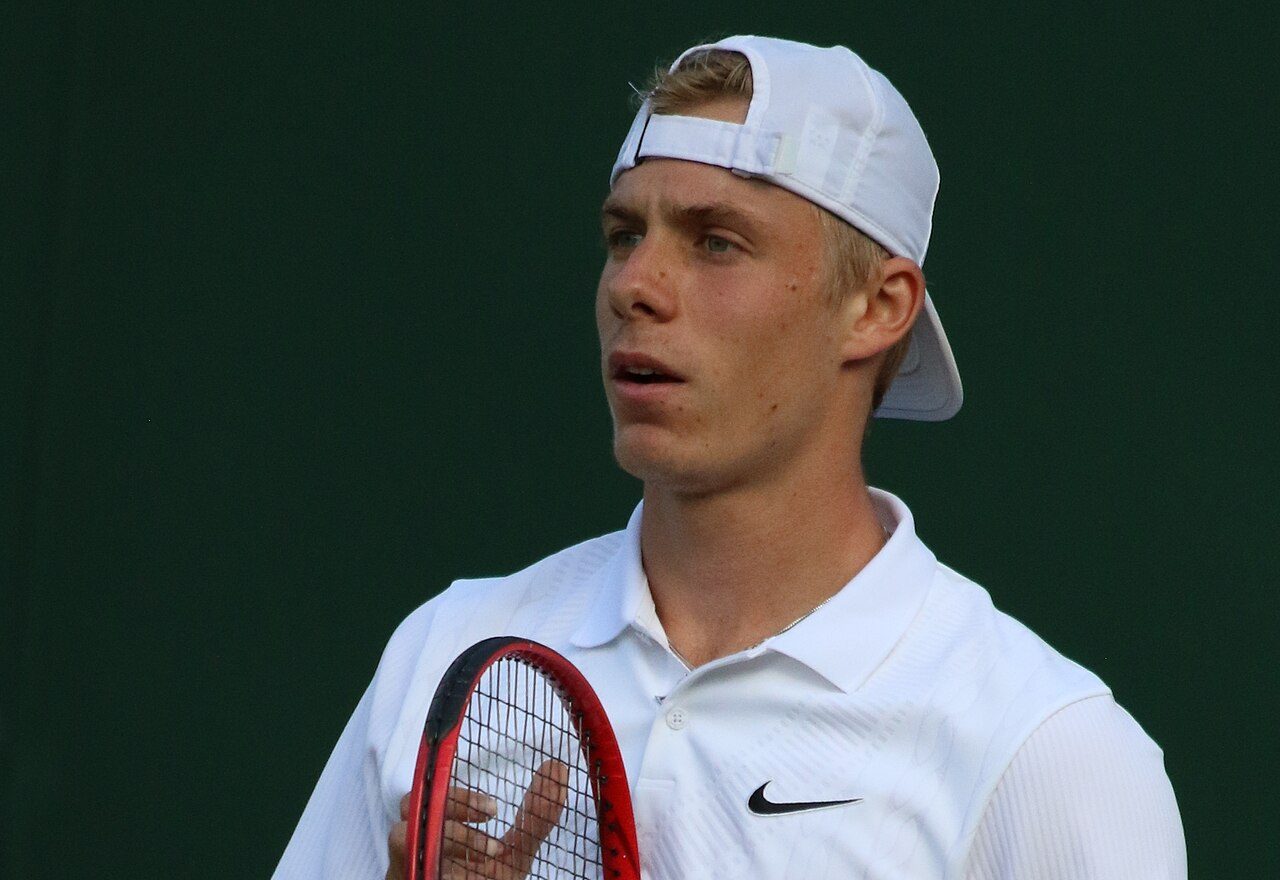
At 18, Denis Shapovalov stood across the net from Rafael Nadal in Montreal and refused to retreat. He beat the Spaniard 3-6, 6-4, 7-6 in front of a roaring home crowd at the 2017 Canadian Open, then kept going to the semifinals. Canadian tennis had another player capable of troubling the established names.
That night introduced a wider audience to the left-hander’s strengths: a forceful serve, a sweeping one-handed backhand and a willingness to attack from positions where most players would settle for staying in the rally. The same appetite for risk has shaped his career, bringing a Wimbledon semifinal, a place in the world’s top 10 and stretches when the errors have outnumbered the winners.
A family-built beginning in Ontario
Born on April 15, 1999, in Tel Aviv, Israel, Shapovalov moved to Canada with his family before his first birthday. He grew up in the Toronto area alongside his older brother, Evgeniy.
His mother, Tessa Shapovalova, was his first coach. She began teaching him at five and later established Tessa Tennis in Vaughan, Ontario. His earliest development took place in a family-run environment, with his mother helping build the strokes that would eventually become his professional calling cards.
Roger Federer was a childhood idol. Although Shapovalov played left-handed, the Swiss player’s one-handed backhand and attacking instincts offered a model.
Canadian junior tennis also gave him a contemporary with similar ambitions. In 2015, he and Félix Auger-Aliassime won the US Open boys’ doubles title. Their careers would remain linked through national-team competition, even as they pursued different routes on tour.
A year later, Shapovalov won the Wimbledon boys’ singles title, beating Alex de Minaur in the final. He reached No. 2 in the junior rankings that July and soon showed that his game could trouble adults, too: at the Canadian Open in Toronto, he defeated Nick Kyrgios for his first ATP Tour main-draw victory.
The two sides of his 2017 breakthrough
His first full breakthrough season began with an incident that demanded more than a sporting explanation.
During a Davis Cup tie against Great Britain in February 2017, Shapovalov struck a ball in frustration and unintentionally hit chair umpire Arnaud Gabas in the eye. He was defaulted, ending the deciding match and the tie. He apologized afterward and accepted responsibility.
Six months later, Montreal changed the conversation.
Before beating Nadal, he saved match points against Rogerio Dutra Silva and defeated former US Open champion Juan Martín del Potro. His run ended against Alexander Zverev in the semifinals, but at 18 he had become the youngest semifinalist in the Masters 1000 series, which began in 1990.
He then qualified for the US Open and reached the fourth round, defeating Jo-Wilfried Tsonga along the way before losing to Pablo Carreño Busta. The results carried him into the top 100 and established that Montreal had been more than a remarkable week at home.
Stockholm, Paris and the climb to No. 10
Turning spectacular tennis into repeatable results took time. Shapovalov could take control of a match with a burst of clean hitting, but his aggressive choices also left little margin when his timing slipped.
In October 2019, he won his first ATP singles title in Stockholm, beating Filip Krajinović in the final. Soon afterward, he reached his first Masters 1000 final in Paris. Nadal withdrew before their scheduled semifinal, and Novak Djokovic defeated him in the championship match.
The following season brought a deeper Grand Slam run. At the 2020 US Open, Shapovalov beat David Goffin to become the first Canadian man to reach the tournament’s singles quarterfinals. Carreño Busta stopped him in five sets.
On September 21, 2020, he reached a career-high singles ranking of No. 10. It was a significant step, though maintaining that level would prove harder than reaching it.
He also found success in doubles, particularly alongside India’s Rohan Bopanna, reaching a career-high doubles ranking of No. 44 in February 2020.
Wimbledon rewards his attacking instincts
The grass at Wimbledon had suited him as a junior. In 2021, it provided his strongest Grand Slam performance as a professional.
Shapovalov defeated Andy Murray in the third round and Roberto Bautista Agut in the fourth, then survived a five-set quarterfinal against Karen Khachanov. Against opponents with very different strengths, he found enough control to keep his attacking game working.
Djokovic ended his run in the semifinals, winning 7-6, 7-5, 7-5. The straight-sets score concealed a competitive match in which the Canadian created opportunities but could not convert enough of them against the eventual champion.
At the Australian Open in January 2022, he reached another quarterfinal. Facing Nadal, he recovered from two sets down before losing in five. Those encounters with Nadal and Djokovic became important reference points: he could challenge the leading players, but sustaining his level through the decisive moments remained the test.
Winning together with Canada
The 2022 season also brought two team trophies.
In January, Shapovalov helped Canada win the ATP Cup, defeating Carreño Busta in the final against Spain before Auger-Aliassime secured the title.
In November, the pair helped deliver Canada’s first Davis Cup championship. Shapovalov beat Thanasi Kokkinakis in the opening singles match of the final against Australia; Auger-Aliassime then defeated De Minaur to complete a 2-0 victory.
For a player whose early Davis Cup experience had ended in a default, it was a particularly meaningful change of scene. This time, his contribution helped settle the final in Canada’s favor.
Clay has been less productive than grass or hard courts. Third-round appearances at Roland Garros in 2023 and 2024 were improvements, but Paris remained the only major where he had not reached the quarterfinals.
Injury, rebuilding and more titles
A knee injury interrupted his 2023 season after Wimbledon and kept him away from competition for the rest of the year. The absence disrupted his ranking and left him working back toward the level he had previously taken for granted.
His second ATP title finally arrived in Belgrade in November 2024, five years after Stockholm. Coming through qualifying, he beat Hamad Medjedović in the final.
He holds two ATP Tour singles titles: Stockholm and Belgrade.
A game built to take the initiative
At 1.85 metres tall, Shapovalov generates substantial pace without relying on the height of the tour’s biggest servers. His left-handed delivery can pull opponents wide, creating space for the next shot.
The backhand is the most recognizable stroke. He can drive it down the line, change direction sharply or hit it while airborne. When his footwork and timing align, it gives him attacking options that opponents cannot easily anticipate.
He is also comfortable moving forward and finishing at the net. Grass rewards those instincts, although his titles on indoor and outdoor hard courts show that his game is not confined to one surface.
The trade-off is clear. Early ball-striking and ambitious targets can rush an opponent, but they can also produce clusters of errors. His best performances combine that natural aggression with enough patience to choose the right opening.
Music, sneakers and life beyond tennis
Tennis has remained part of his personal life as well as his working life. Shapovalov and Swedish player Mirjam Björklund publicly announced their engagement in July 2023. Their social-media posts have offered glimpses of training, travel and time together away from tournaments.
Music provides a separate outlet. Performing under the name “Shapo,” he has released rap tracks, taking an interest that began away from the court into recording and songwriting.
He has also discussed his enthusiasm for sneakers in player features, including a collection displayed at his Bahamas home. It is a more everyday preoccupation than the ranking calculations and match analysis that dominate a touring professional’s schedule.
He speaks English and Russian, reflecting both his Canadian upbringing and family background. Between the music, footwear and close tennis connections, his off-court interests have given supporters something to follow beyond the highlights reel.
FAQ
Where is Denis Shapovalov from?
He was born in Tel Aviv, Israel, and moved to Canada before his first birthday. He grew up in the Toronto area and represents Canada.
When was he born?
His date of birth is April 15, 1999.
What is his highest ranking?
He reached a career-high ATP singles ranking of No. 10 on September 21, 2020.
How many ATP singles titles has he won?
He has won two ATP singles titles: Stockholm in 2019 and Belgrade in 2024.
What is his best Grand Slam result?
His deepest major run through 2025 was the Wimbledon semifinals in 2021. He also reached the US Open quarterfinals in 2020 and Australian Open quarterfinals in 2022.
Who is Mirjam Björklund?
She is a Swedish professional tennis player. She and Shapovalov publicly announced their engagement in July 2023.
Photo: si.robi, CC BY-SA 2.0, via Wikimedia Commons