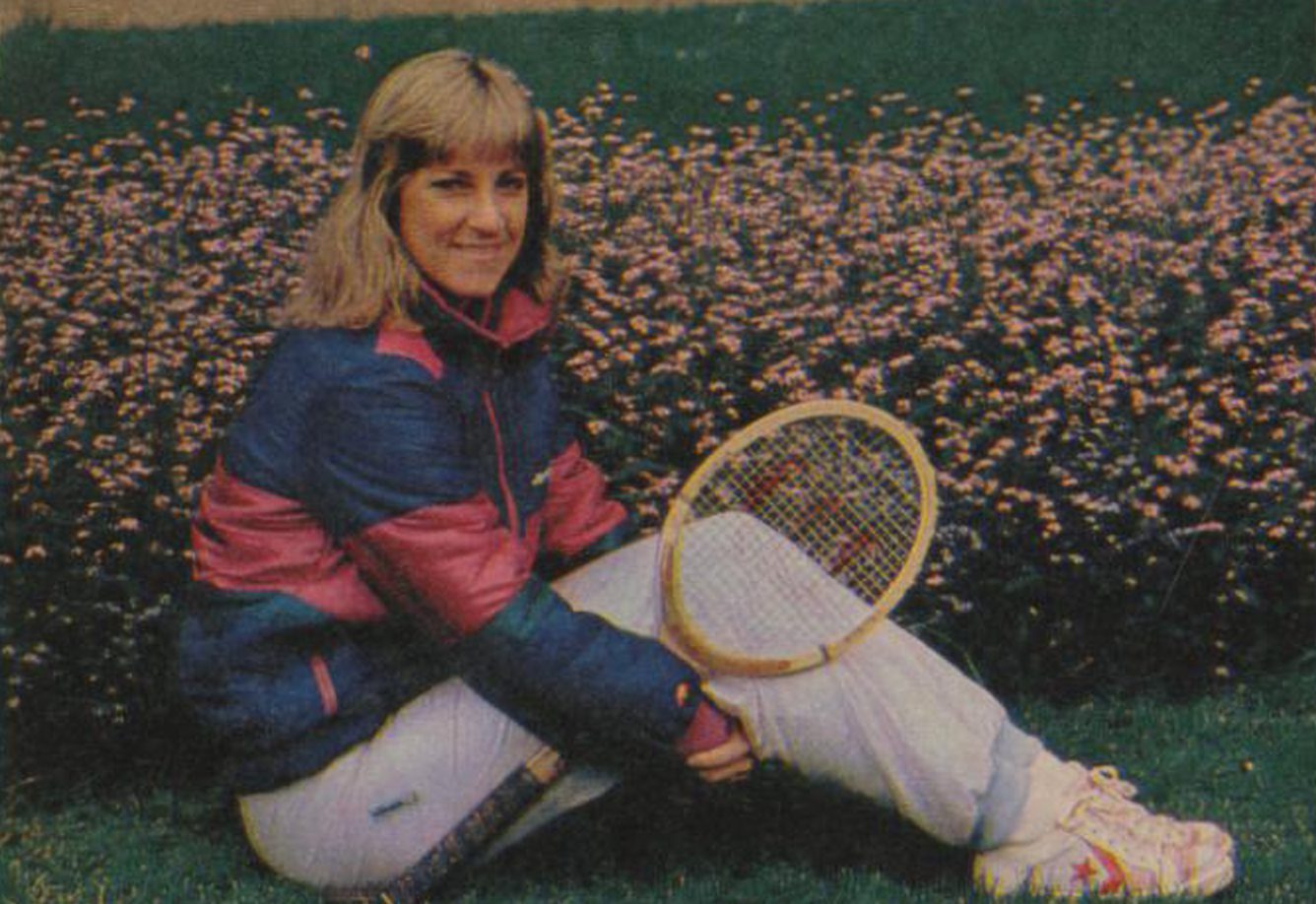
A 125-match winning streak on clay tells part of the story. So does 18 Grand Slam singles titles, 157 singles trophies and 260 weeks at world No. 1. But numbers alone do not quite capture Chris Evert, the player who made control look natural and turned baseline tennis into a form of pressure that opponents could feel point after point.
Born Christine Marie Evert in Fort Lauderdale, Florida, she grew up in a family where tennis was not a hobby but the household language. Her father, Jimmy Evert, was a respected coach, and he put a racket in her hand early. She started playing at five, learned under his eye, and developed in a setting where repetition, discipline and clean technique were part of daily life. Her siblings were players too, including Jeanne Evert, who also reached the professional tour.
By her early teens, the promise was already obvious. Evert became the top-ranked player in the U.S. girls’ 14-and-under division, and at 16 she produced the result that introduced her to a wider audience: a run to the semifinals of the 1971 US Open. She was still an amateur then, but the composure was already there. She did not look overawed by the stage, and that became a theme of her career.
From prodigy to major champion
Evert turned professional in 1972, and the rise was quick without ever feeling rushed. She reached major finals before she started winning them, losing to Margaret Court at the 1973 French Open and to Billie Jean King at Wimbledon that same year. Those defeats mattered because they placed her directly against the established champions of the time. She was not building her reputation in the margins. She was doing it in the biggest matches.
Her breakthrough at Grand Slam level came in 1974, when she won the French Open. A few weeks later, she won Wimbledon as well, a reminder that her game was not limited to one surface. Clay suited her best, but she was too complete, too balanced and too mentally steady to be boxed in as a specialist.
The version of Chris Evert that came to define the era was built on precision rather than force. She played right-handed, struck a compact two-handed backhand, moved cleanly and made very few mistakes. Opponents often had to play one extra ball, then another, then another still. That was where her control became suffocating. She did not need to overwhelm rallies. She could simply outlast and outplace.
Her public image brought nicknames such as “Ice Princess” and “Little Miss Cool,” labels that reflected how composed she looked under pressure. On court, though, the calm was not passivity. It was competitive discipline.
The years when Chris Evert barely blinked
From the mid-1970s into the mid-1980s, she was one of the central figures in women’s tennis. Evert reached 34 Grand Slam singles finals and won 18 of them, a remarkable spread of success across surfaces and seasons.
Her major titles came in every Slam except the Australian Open only in the sense that she played it less often than the others, as many top players of that era did. When she did enter, she won it twice, in 1982 and 1984. At Roland Garros, she won seven singles titles: 1974, 1975, 1979, 1980, 1983, 1985 and 1986. Wimbledon brought three titles, in 1974, 1976 and 1981. The US Open, played in front of her home crowd and across changing surfaces during her career, brought six more: 1975, 1976, 1977, 1978, 1980 and 1982.
The consistency is almost harder to grasp than the title count. Evert never lost in the first or second round of a major. In 52 of the 56 Grand Slam singles events she played, she reached at least the semifinals. She won at least one major title in 13 consecutive years, from 1974 through 1986. That kind of reliability is rare in any era.
Her first ascent to world No. 1 came in November 1975. Across her career, she spent 260 weeks in that position. In 1976, she also became the first woman in professional sports to earn $1 million in career prize money, another sign of both her success and the growing commercial reach of women’s tennis.
Why clay brought out the best in her
If one surface best explains Chris Evert’s tennis, it is clay. From August 1973 to May 1979, she won 125 consecutive matches on clay, one of the great surface streaks in the sport.
Clay rewarded everything she did well. Her footwork was economical, her balance excellent, and her patience almost impossible to disturb. She could redirect the ball with her backhand, keep it deep, and make opponents construct points over and over again. On faster courts she was still elite; on clay she often looked immovable.
That is why her game mattered beyond her own results. Long before baseline tennis became the standard at the top of the women’s game, Evert showed how devastating it could be when built on timing, geometry and nerve.
Rivalries that shaped an era
No rivalry defines her career more clearly than the one with Martina Navratilova. They played 80 tour-level singles matches, with Navratilova leading 43-37. The number itself says plenty. This was not an occasional final between two stars. It was a recurring contest between contrasting styles and personalities that helped define women’s tennis for more than a decade.
Evert’s baseline precision met Navratilova’s left-handed variety, athleticism and net play. Their matches became a running tactical conversation about where the sport was going. Sometimes Evert’s steadiness controlled the terms. Sometimes Navratilova’s aggression did. Together they raised the standard.
Before that rivalry fully took over the tour, Billie Jean King was another important measuring stick. Evert lost to King in the 1973 Wimbledon final, then built a strong head-to-head edge over her, finishing 19-7 in their meetings. That arc matters in a Chris Evert biography because it shows the handover from one generation to the next.
Titles beyond the majors, and one brief pause
The Grand Slam record is the headline, but the week-to-week body of work was just as imposing. Evert finished with 157 singles titles and 32 doubles titles. She also won the season-ending championships four times, taking the title in 1972, 1973, 1975 and 1977.
She was a major presence in team competition as well, helping the United States win the Fed Cup eight times: 1977, 1978, 1979, 1980, 1981, 1982, 1986 and 1989.
There was one interruption in an otherwise remarkably steady career. In early 1980, Evert stepped away from the tour for a short period and returned that spring. The pause did not derail her season. She came back to win both the French Open and the US Open that year, a neat summary of how quickly she could reassert herself.
She also took on leadership roles within the sport, serving as WTA president from 1975 to 1976 and again from 1983 to 1991.
Life away from the baseline
Off the court, Evert’s life was often public, sometimes uncomfortably so. She was engaged to Jimmy Connors in the mid-1970s, but the engagement ended before marriage. She later married British player John Lloyd in 1979; they divorced in 1987. In 1988, she married former skier Andy Mill, and they had three sons: Alexander, Nicholas and Colton. That marriage ended in divorce in 2006. She then married Greg Norman in 2008, and that marriage ended the following year.
Some parts of her private life have long circulated in tabloids and celebrity coverage. Claims about relationships beyond her marriages should be treated carefully. Reports have linked her at various times with figures including Adam Faith, but such accounts belong in the category of reported or rumored relationships unless confirmed by Evert herself. Likewise, other rumored links that have appeared in entertainment-style lists and gossip coverage are not established facts.
A more serious personal controversy entered public view when Jimmy Connors wrote in his autobiography about a pregnancy during their relationship. Because that account came from Connors and concerned private medical history, it should be understood as his published claim, not an independently established fact. Evert publicly criticized the disclosure.
What is firmly established is her long second act in tennis. She co-founded the Evert Tennis Academy in Boca Raton in 1996 and later moved into broadcasting, becoming a familiar analyst for ESPN. She also served as publisher of Tennis magazine for a period and remained a visible figure in the sport long after retirement.
Her charitable work has been substantial too. Chris Evert Charities, founded in 1989, has raised millions to support programs for at-risk children and drug-abuse prevention. After revealing an ovarian cancer diagnosis, she also spoke publicly about treatment, recovery and the importance of family medical history in women’s health.
Retirement, and what lasted after it
Chris Evert retired in 1989 after the US Open, leaving with her standards intact. The final totals remain striking: 18 major singles titles, 34 major finals, 157 singles titles, 32 doubles titles and a career singles record of 1,309-146. Her winning percentage, just under 90 percent, is among the best the game has seen.
But the deeper legacy is stylistic. Evert helped normalize the idea that a player could dominate from the baseline not by retreating, but by taking control with depth, accuracy and emotional steadiness. Many champions who followed played a more modern version of that same logic.
That is why her place in tennis history feels so secure. Chris Evert did not just win constantly. She changed what top-level consistency looked like.
FAQ
How many Grand Slam titles did Chris Evert win?
Chris Evert won 18 Grand Slam singles titles.
When did Chris Evert become world No. 1?
She first reached world No. 1 in November 1975 and spent 260 weeks there in total.
What was Chris Evert’s playing style?
She was a baseline player known for consistency, precise placement, excellent movement and a two-handed backhand.
Who was Chris Evert’s biggest rival?
Her defining rivalry was with Martina Navratilova. They played 80 singles matches, with Navratilova leading 43-37.
How many French Open titles did Chris Evert win?
She won seven singles titles at Roland Garros.
What did Chris Evert do after retirement?
She moved into broadcasting, co-founded the Evert Tennis Academy and continued her charity work through Chris Evert Charities.
Photo: Unknown author Unknown author, Public domain, via Wikimedia Commons