
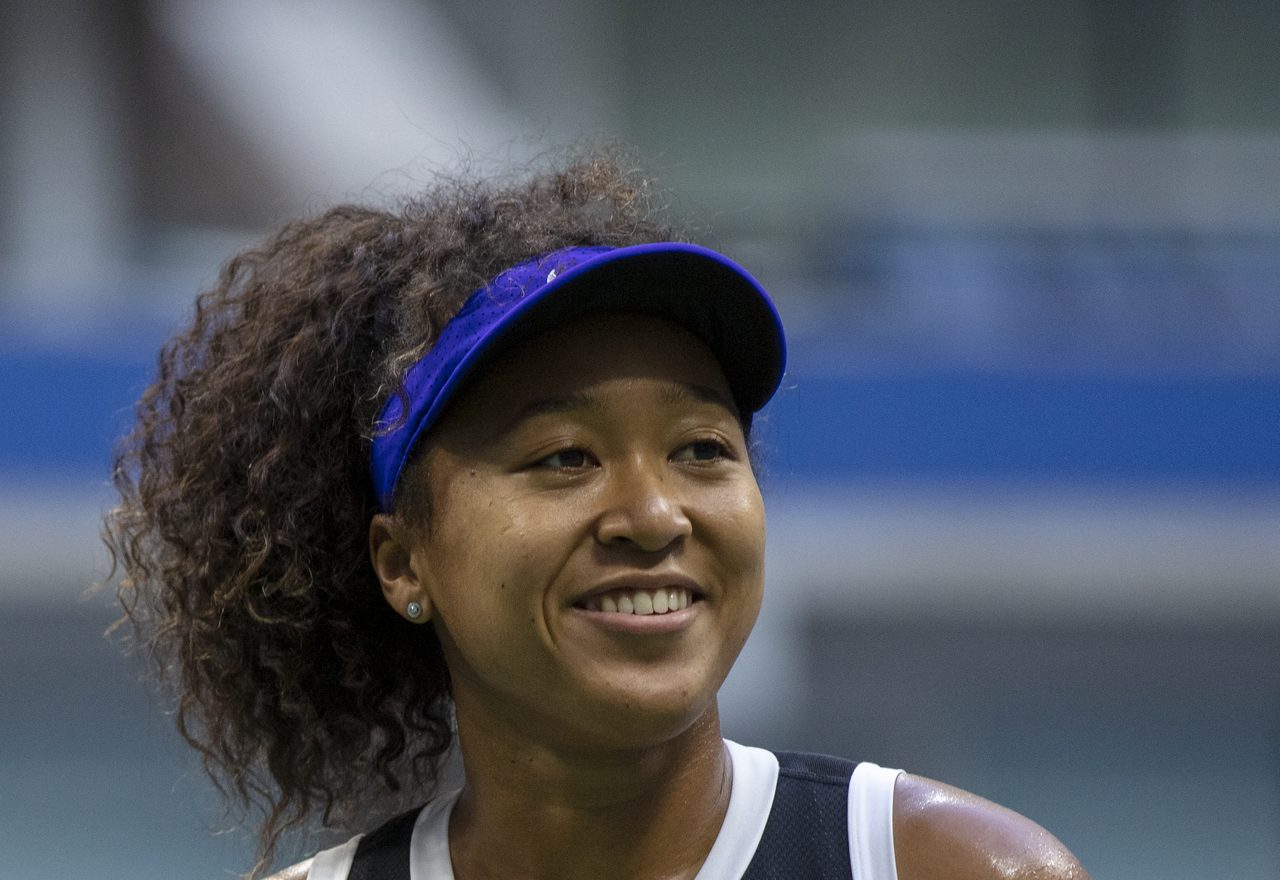
Four major titles arrived fast. So did the pressure, the scrutiny and the sense that Naomi Osaka was carrying more than her own career every time she walked onto a hard court.
Naomi Osaka: from Osaka to Florida
Naomi Osaka was born on October 16, 1997, in Chuo-ku, Osaka, Japan, to a Haitian father, Leonard François, and a Japanese mother, Tamaki Osaka. When she was still a small child, the family moved to the United States and settled in Florida, where her tennis life took shape.
Her father, inspired by the path of Venus and Serena Williams, took the lead in her early coaching despite having no traditional tennis background. It was an unconventional start, and much of her development stayed outside the usual junior spotlight. She did not build a big reputation through junior Grand Slams or a heavily documented junior career. Instead, she learned in training blocks, academies and lower-level pro events, gradually turning raw power into a top-level game.
The family also made an early decision that she would represent Japan. She took her mother’s surname, Osaka, and grew up with both Japanese and Haitian roots shaping how she was seen in tennis and beyond.
She turned professional in 2013, beginning a climb that was not especially glamorous at first but was easy to notice once the ball started flying off her racket.
The first signs of a breakthrough
The first real jolt came in 2014 at Stanford. Playing her first WTA main-draw match, the teenager beat former US Open champion Samantha Stosur. It was one of those early upsets that instantly tells the tour a player has unusual weight of shot.
Osaka was still inconsistent, still learning how to manage points and matches, but the outlines were already there: a huge first serve, clean contact off both wings, and the willingness to take the ball early rather than drift behind the baseline.
By 2016, the rise had become more concrete. She reached the third round of the Australian Open, then made a deeper run at the French Open, where she got to the third round again and drew wider attention. Later that season she reached her first WTA final in Tokyo and finished the year inside the top 50. The WTA named her Newcomer of the Year.
That season mattered because it moved her from “dangerous prospect” to established tour presence. She was no longer just a player with power. She was starting to back it up with results.
Indian Wells changed the scale
A first title can change the way a player is discussed. Osaka’s first was bigger than most.
In March 2018, she won Indian Wells, beating Daria Kasatkina in the final to claim her first WTA title at one of the biggest events outside the majors. The run was striking not only because she won it, but because of how cleanly she hit through the draw. Her hard-court game suddenly looked complete enough to win the sport’s biggest matches.
Six months later, it did.
The 2018 US Open and a complicated coronation
The US Open final in 2018 should have been a simple breakthrough story: Naomi Osaka beat Serena Williams 6-2, 6-4 to win her first Grand Slam title. Instead, it became one of the most tense major finals in recent memory.
Osaka played fearless, first-strike tennis and handled the occasion far better than many expected from a 20-year-old. But the match was overshadowed by the dispute between Williams and chair umpire Carlos Ramos, and the trophy ceremony unfolded in a stadium full of noise and confusion. Osaka, who had grown up admiring Serena, won the biggest title of her life in an atmosphere that felt anything but celebratory.
The result still stood as a landmark. She became the first Japanese player to win a Grand Slam singles title.
World No. 1 and another Slam in Melbourne
The next major step came immediately. At the Australian Open in 2019, Osaka beat Petra Kvitová in a high-pressure final, 7-6(2), 5-7, 6-4, to win her second straight major.
That victory lifted her to world No. 1, making her the first Asian player, male or female, to top the singles rankings. Across her career, she spent 25 weeks there. It was not a long, steady reign in the style of some all-time greats, but it confirmed how quickly she had turned promise into authority.
Her best tennis was now clearly tied to hard courts. In Melbourne and New York, where the ball came onto the strings and rewarded early aggression, her serve and return combination could take control of matches in a hurry.
Later that year she also won in Beijing, adding another major hard-court title to a season that reinforced her place among the elite.
More majors in New York and Melbourne
Osaka’s third Slam came at the 2020 US Open, where she beat Victoria Azarenka in the final after losing the first set. It was a strong, composed comeback win and another reminder that her game held up under the pressure of the sport’s biggest stages.
Her fourth arrived at the 2021 Australian Open. This time she beat Jennifer Brady in the final and again looked at home on hard courts, where her first serve, flat groundstrokes and ability to redirect pace made her one of the toughest players in the draw.
Those four titles, US Open 2018 and 2020, Australian Open 2019 and 2021, remain the center of the Naomi Osaka career story. She reached four major singles finals and won all four.
The French Open withdrawal and a harder stretch
Then the conversation around her career shifted.
At the 2021 French Open, Osaka announced that she would not do press conferences, citing the mental strain they caused her. After skipping her first media obligation, she was fined $15,000. She then withdrew from the tournament and later spoke openly about depression and anxiety.
The episode became one of the biggest sports stories of the season, not because it involved scandal, but because it forced a public discussion about athlete wellbeing, media demands and the cost of constant visibility. Osaka’s comments were personal and serious, and they changed the tone of how many people talked about mental health in elite sport.
Her tennis results became harder to separate from the wider attention around her. There were still flashes, but the rhythm that had carried her through those hard-court majors was interrupted.
Return, rebuilding and the clay-court subplot
Osaka also carried a major ceremonial role at the Tokyo Olympics, where she lit the cauldron at the opening ceremony. On court, she reached the third round.
In 2023, she stepped away from competition during pregnancy. Her daughter, Shai, was born in July of that year. Osaka has been publicly linked to rapper Cordae, and multiple outlets have reported that they share a daughter; the pair have kept much of their private life relatively guarded.
She returned to the tour in 2024. The comeback did not bring an immediate title, but it did bring a more realistic kind of progress: matches, fitness, sharper movement and signs that the timing was returning. There was also a small but noticeable shift in the conversation around her clay-court tennis. Some fans and media reports used the nickname “Clayomi” after improved results on the surface, though Osaka herself pushed back on it, saying she still had more to prove there.
That response fit her public style. Even after all the success, she has often sounded more cautious than celebratory when talking about her own game.
What makes her game work
At 1.80 m, right-handed with a two-handed backhand, Osaka built her success around first-strike tennis. Her serve has regularly given her free points and short replies, and once rallies start, she is at her best when she can take the ball early and hit through the middle of the court before opening angles.
Hard courts remain the natural setting for that style. The Australian Open and US Open have been the clearest proof of it, but the broader pattern is just as telling: when her timing is right, opponents are often pushed into reactive tennis almost immediately.
She has never been defined by variety in the old-fashioned sense. Her game is about pace, depth and taking time away. At her best, it looks simple because the ball leaves her racket so cleanly.
Off court: business, identity and visibility
Away from the baseline, Osaka has built one of the more varied portfolios in tennis. In 2021, she launched KINLÒ, a skincare brand aimed at melanated skin. She also co-founded Hana Kuma, a media company, and Evolve, a sports agency, with longtime agent Stuart Duguid.
She has invested in businesses including Modern Health and Wave Sports + Entertainment, and she is part-owner of the NWSL club North Carolina Courage. Her endorsement list has been extensive as well, including deals with brands such as Nike, Yonex, Nissan, Mastercard and Louis Vuitton.
That visibility has made Naomi Osaka net worth a frequent search topic, but private wealth estimates vary by outlet and are not exact figures. What is clear is that she has been among the highest-earning women in sport, driven largely by endorsements as well as prize money.
Her sister, Mari Osaka, also played professional tennis. Off court, Naomi Osaka has often shown interests that sit a little outside the standard athlete profile: fashion, gaming, media projects and a dry, understated sense of humor that comes through in interviews and social media.
That mix, major champion, global commercial figure, private person in a very public sport, is part of why her profile has remained so distinctive.
FAQ
How many Grand Slams has Naomi Osaka won?
She has won four Grand Slam singles titles: the US Open in 2018 and 2020, and the Australian Open in 2019 and 2021.
When did Naomi Osaka become world No. 1?
She reached No. 1 after winning the Australian Open in January 2019.
What is Naomi Osaka nationality?
She represents Japan and was born in Osaka, Japan.
Who are Naomi Osaka parents?
Her father is Leonard François, who is Haitian, and her mother is Tamaki Osaka, who is Japanese.
Did Naomi Osaka have a baby?
Yes. Her daughter, Shai, was born in July 2023.
What is Naomi Osaka playing style?
She is an aggressive baseliner known for a powerful serve, early ball-striking and strong hard-court tennis.
Photo: AndrewHenkelman, CC BY-SA 4.0, via Wikimedia Commons